I organized a running event: run as many laps as you can around a 400m track between sunrise and sunset. Simple enough. But what I watched unfold was something special.

The Idea that Stuck
I can’t pinpoint exactly when I decided to host a track ultra, but the seed was probably planted back in 2017. That year, after finishing a 100-miler in 16:05, I realized the Canadian 100-mile road record might actually be within reach. That winter, my husband and I flew to Arizona for the Desert Solstice Track Invitational. Four hundred and four laps later, I broke the record in 15:19:38 and held it for four years. Something about circling the track over and over—chasing a goal, leaning into the repetition—stuck with me.
Years later, the idea started taking shape closer to home. The former mayor of Russell emailed local organizations, encouraging them to take part in the ParticipACTION Community Challenge. I replied right away to say the Russell Run Club was in. We brainstormed a sunrise-to-sunset challenge on the bike path—something walkers, runners, and cyclists could all join.
But just as I was about to pitch it, the Township announced he was stepping down. So… there went that plan.
Still, the idea of a track ultra never left me.
After the Prescott-Russell Relay, I was chatting with Sarah and Pat about future events and casually mentioned it. Their eyes lit up. Pat was especially excited—he said all the ultras seemed to happen in the GTA, and something local would be amazing. That small conversation was the spark that finally got everything rolling.
The First Steps
That small conversation kicked off the planning. In March, I sent out a survey to the Russell Run Club community and the Cornwall Multisport Club to gauge interest.
Some of the comments were surprisingly enthusiastic—and a little amusing:
What is your goal?
“To finish and not die.”
“Survive.”
“Stay upright and smiling.”
“No clue.”
“Fun…personal goals.”
“Completion, social, accomplishment.”
“Possible ultra marathon.”
“Once in a lifetime experience.”
Twenty was enough to get the ball rolling—but I’ve been burned by surveys before.
When registration opened, I set a deadline: if we didn’t hit 15 entries by May 15, I couldn’t run it. We had 12.
After some shuffling with the budget—and a bit of hopeful math—I decided to go ahead anyway. I figured a few stragglers might sign up as the date got closer.
Like any race director, the moment the 14-day weather forecast appeared, I started watching it obsessively. Rain. Chance of rain. Sun. Then back to rain again. I needed the sun.
It was the first time we were doing this. I needed pictures. I needed stories. I needed something I could use to convince people to come back next year. What I didn’t need was an empty track on a rainy day and a handful of soggy, miserable volunteers. That’s not exactly a vibe that says Sign me up for 2026!
In the days leading up to the event, the excitement was building—not just from the participants, but from the volunteers too. There was chatter at group runs and at parkrun. I saw social media posts about training and race-day prep. People were all in.
Of course, I should have been excited, but like all new things I do, I embraced it with nervousness and the fear that it wouldn’t be what they hoped it would be.
The Sun-Rise
Sunrise was at 5:14 a.m., which meant being on-site by 4:00 AM and being up hours before that doing all the last-minute prep.
(Also—note to self: why did I choose sunrise to sunset? “8 to 8” would have been so much more civilized.)
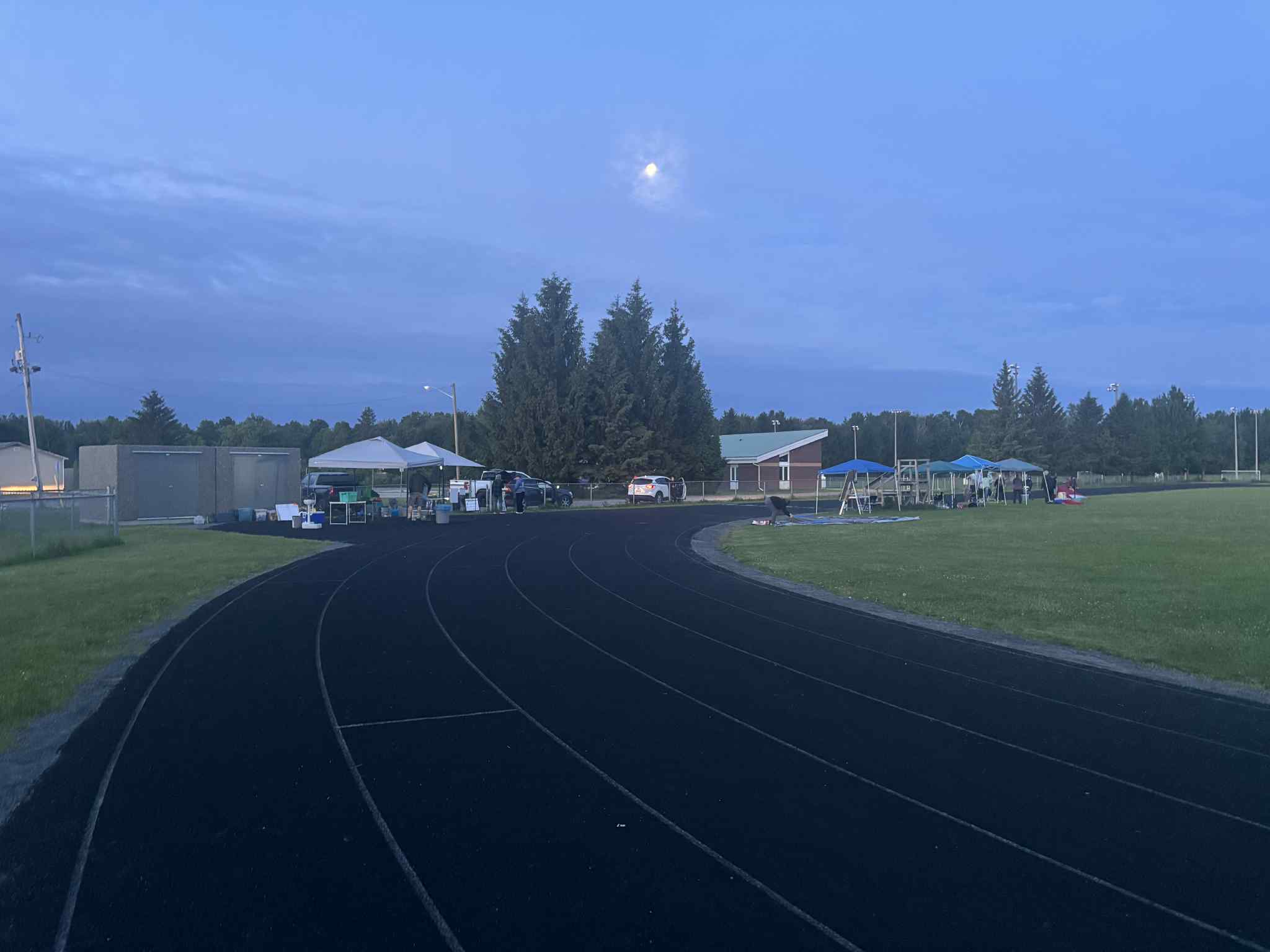
With my husband still in bed, fully aware we needed to be at the high school setting up now, I left on my own. When I arrived, twilight was just breaking. The moon was still out, and the sky was clear. It looked like it was going to be a great day.
Then came the rush—less than 75 minutes to get tents up, tables out, and all the gear in place. At 4:30 a.m., the first participant arrived. The rest trickled in, some right up to the last few minutes before start time.

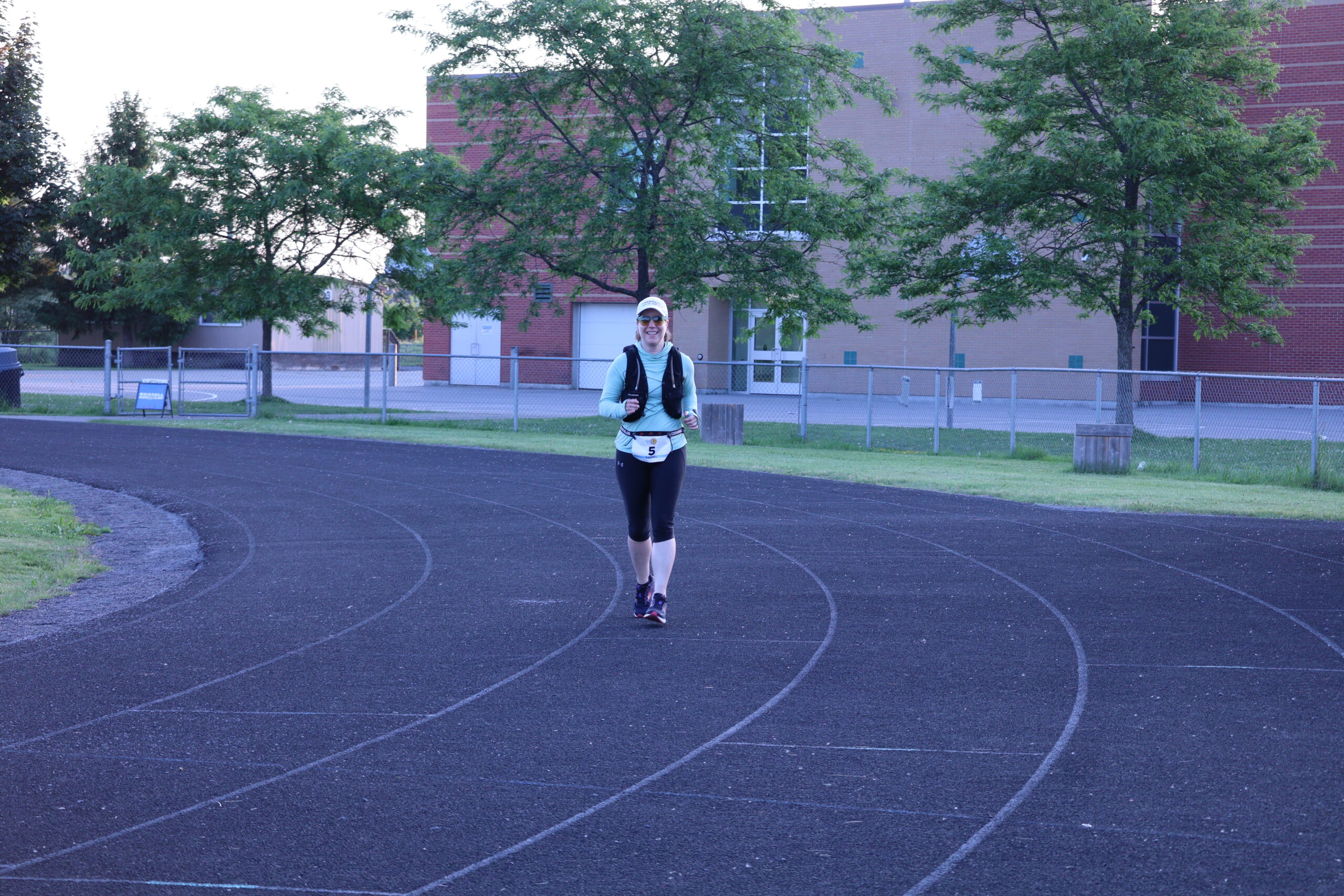
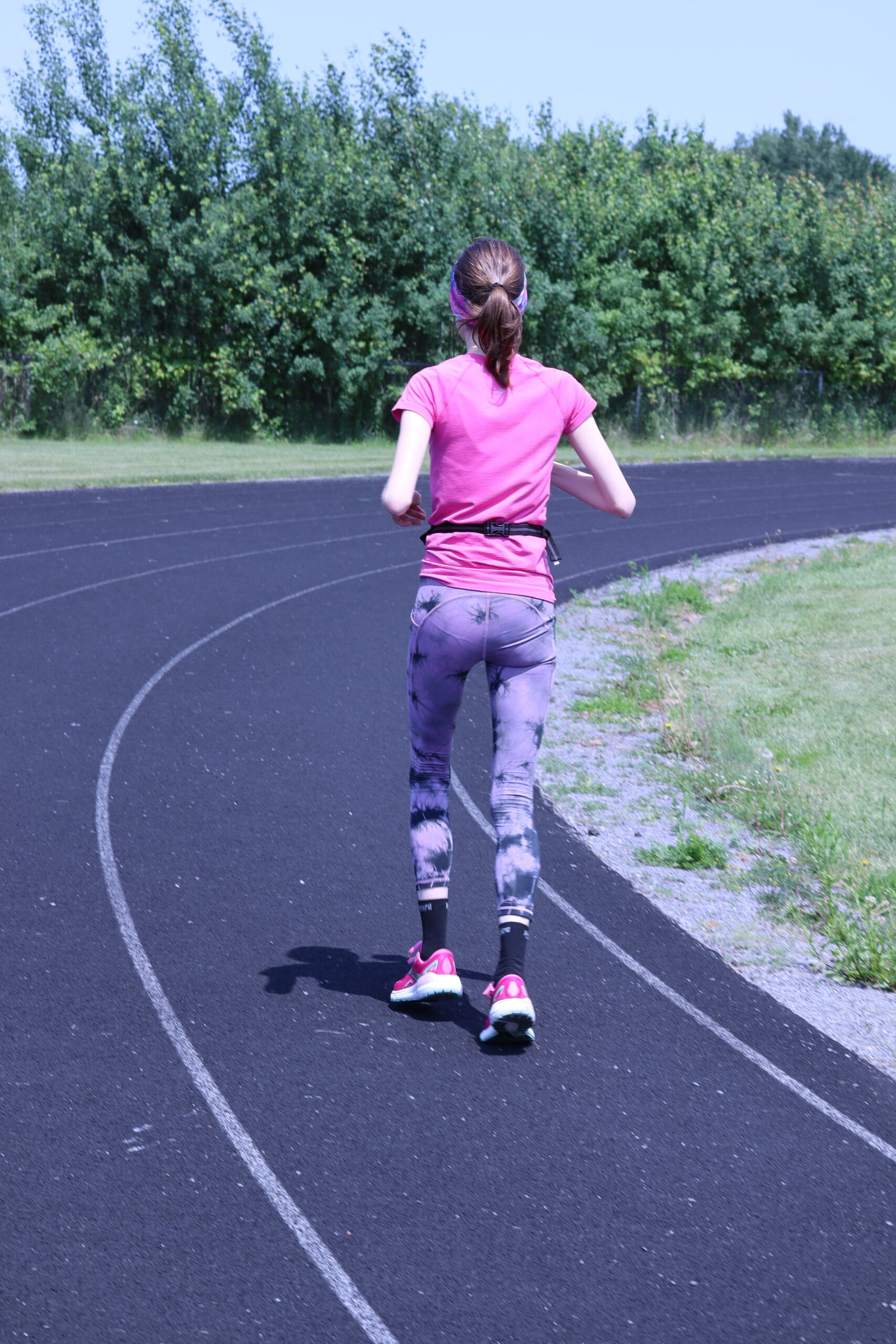
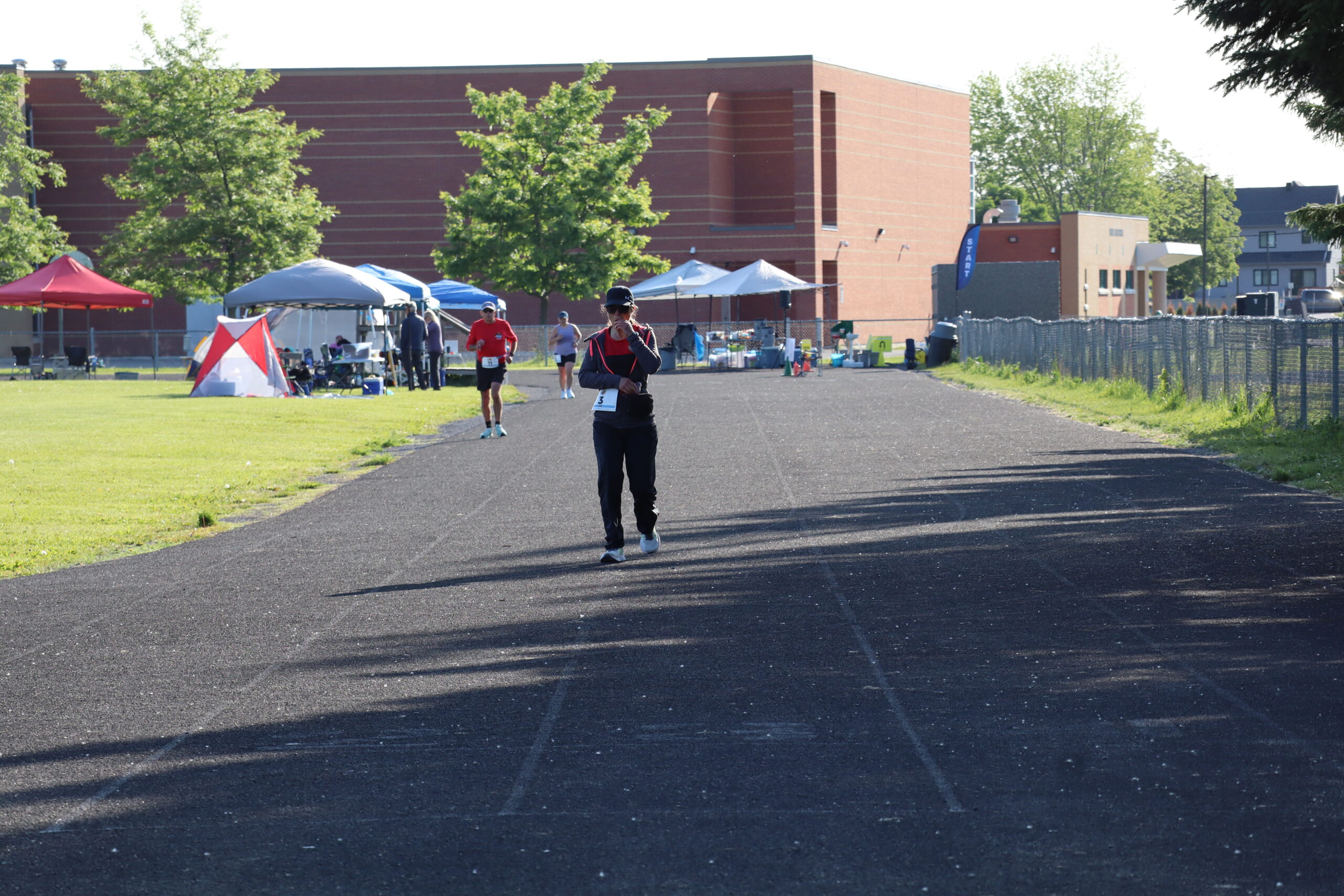
Eleven of the nineteen were starting at sunrise, ready to take on the full 15-hour, 38-minute challenge. They lined up in the quiet blue dawn. After a quick pre-race briefing, they were off—not blazing fast, but easing into a steady jog. They knew enough to hold back, to let the excitement settle, to save something for the long hours ahead.

Finding the Groove and Vibes
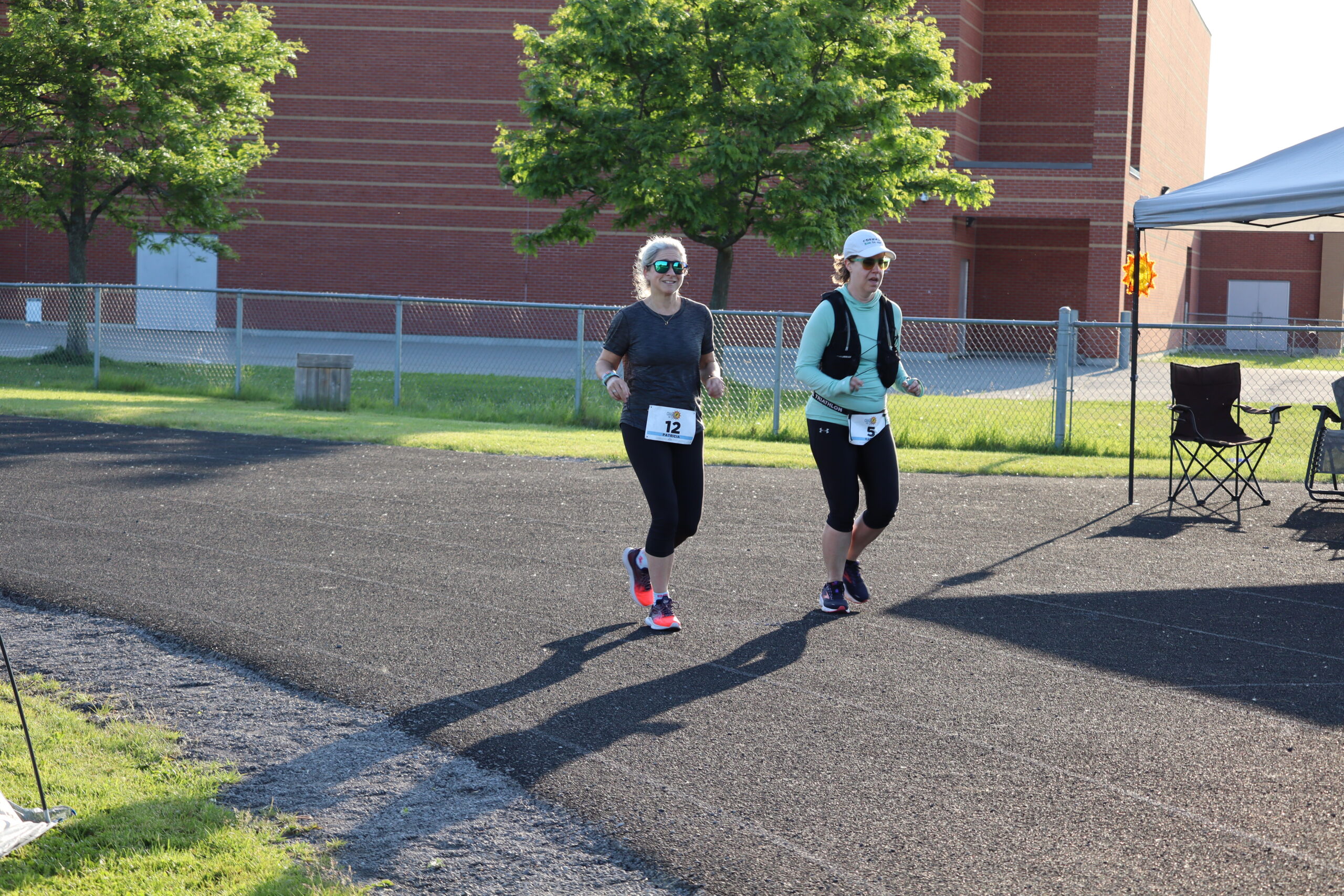
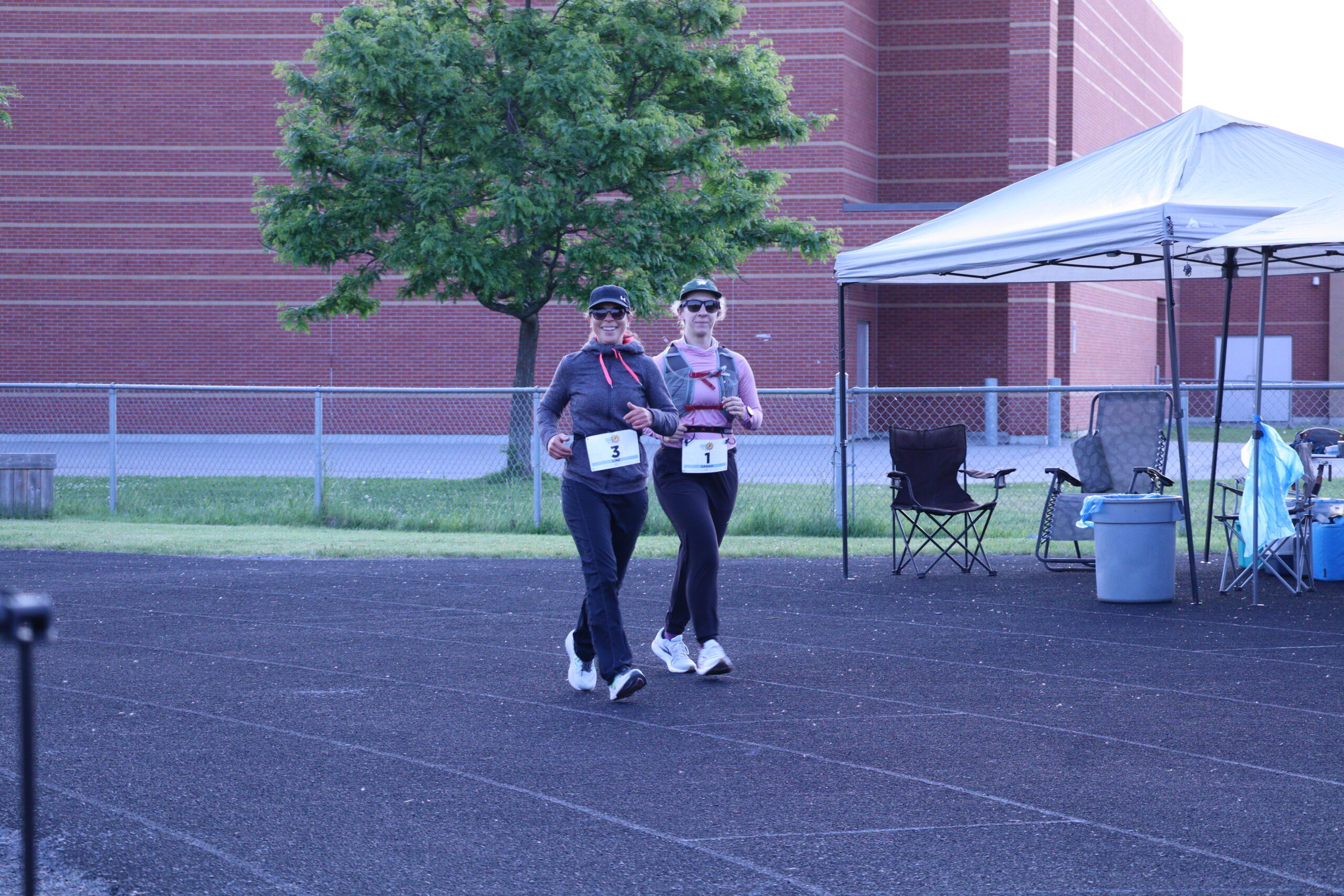
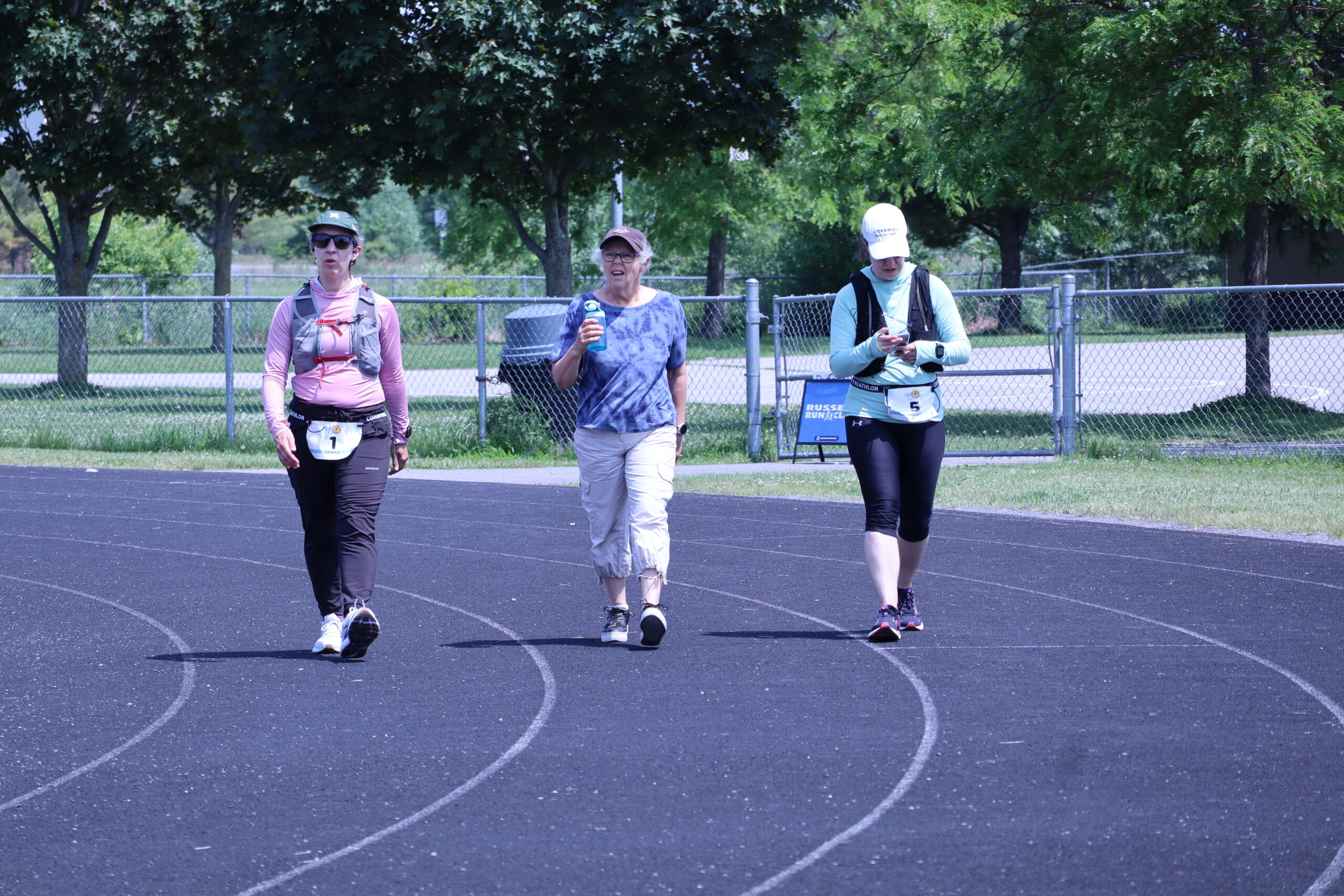
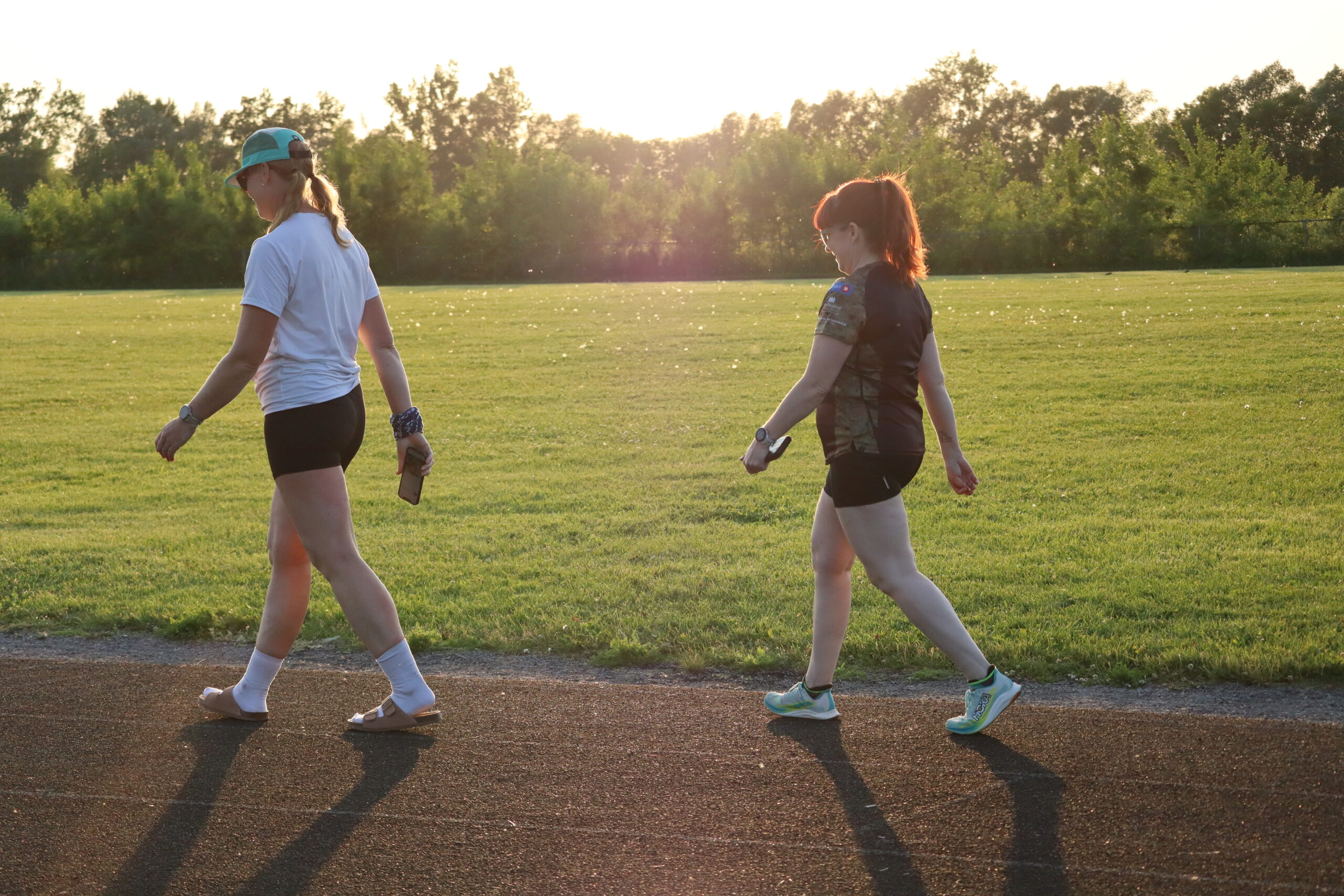
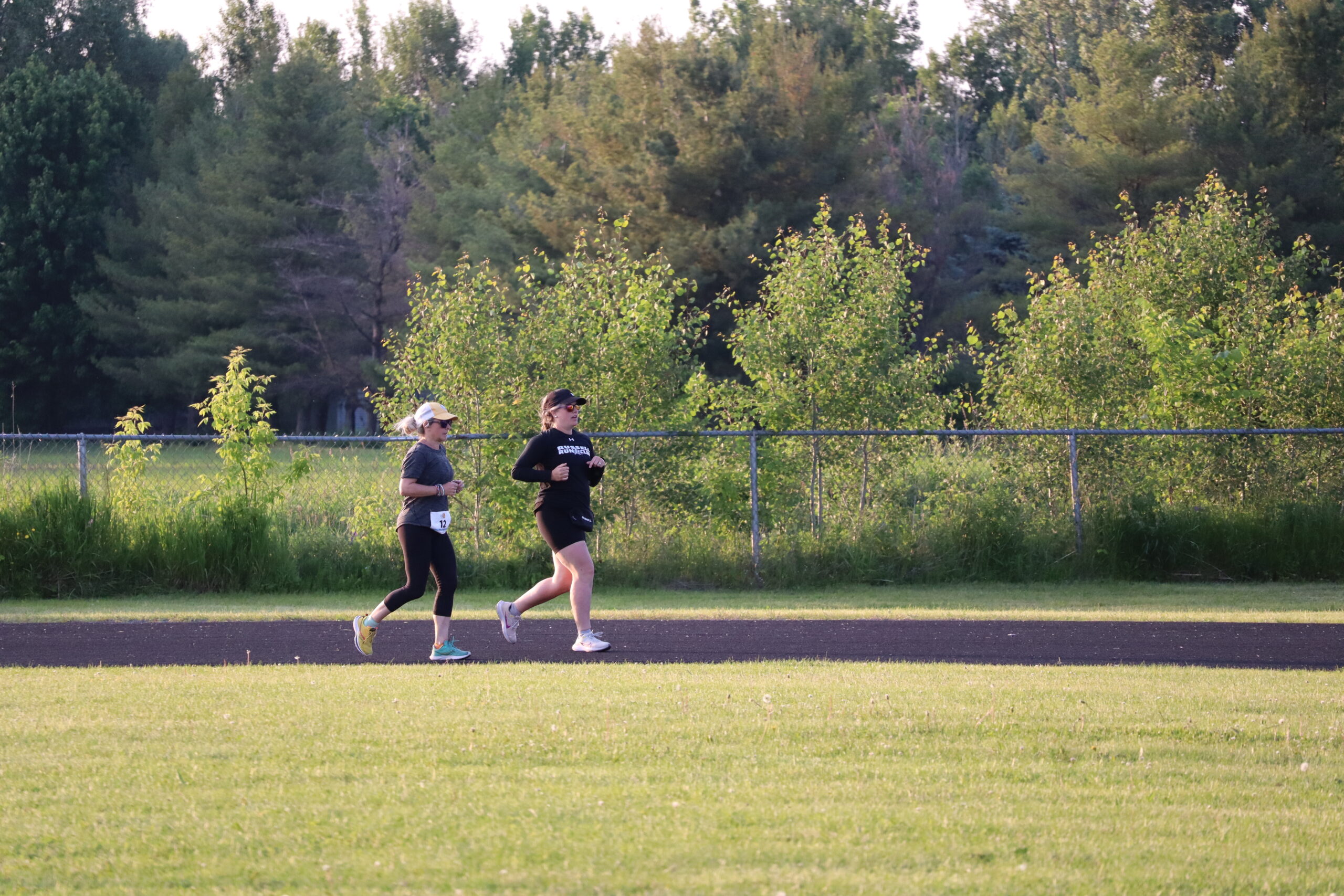
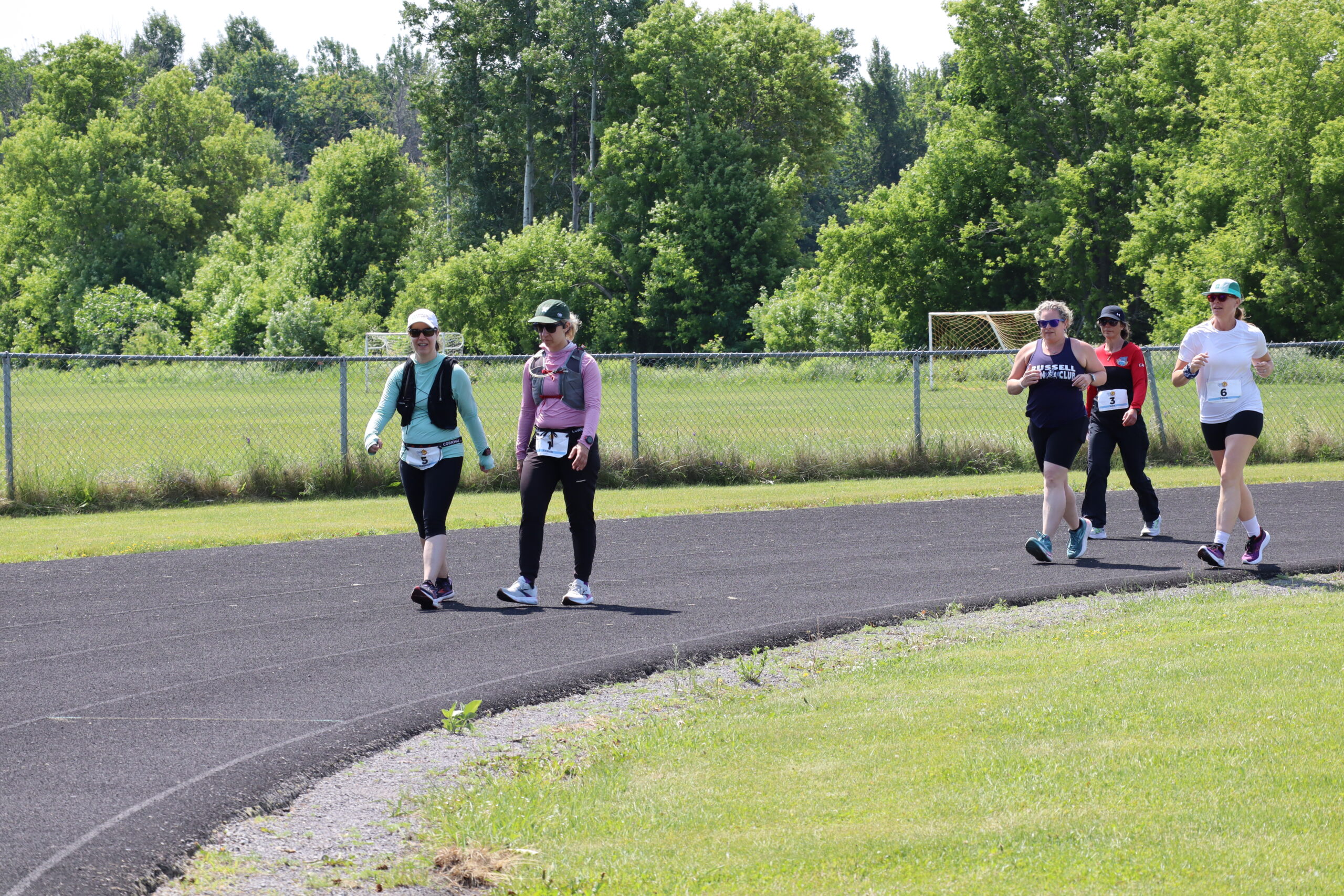
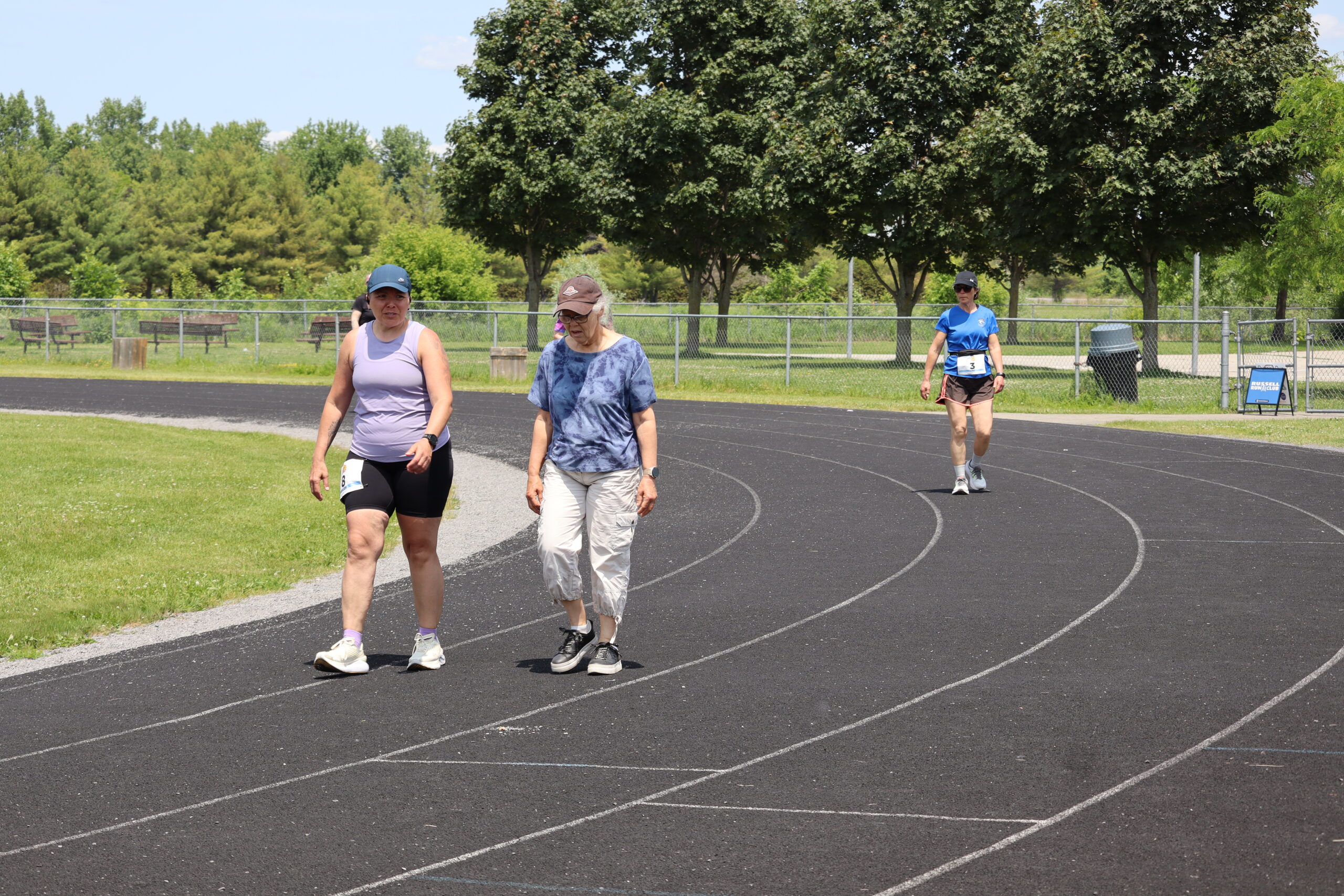
As the runners finished their first lap, I noticed they naturally started to pair up, chatting as they moved. There was no sense of competition, no pressure to break a record or qualify for a national team. Just a day of running, supporting each other, building friendships, and being part of something new and unique in this community.
The mood stayed upbeat all day. Smiles were everywhere.
Melisande was in her element, showing up to help out at 4:00 a.m. Two hours in, I set her loose on the track with her phone to interview each runner—checking in on their goals and capturing their stories. By the end of the day, she was back with them, closing out their journeys and hearing how it had all unfolded.
Despite the long hours, she still had enough enthusiasm and energy left to pace the 100 km ladies right to the finish.
Counting Every Lap
The club handled the timing. Hiring a professional timing company would have added well over a hundred dollars to everyone’s registration fee, and it just didn’t make sense.
About a week before the event, I spent every spare minute learning the Webscorer app—reviewing settings, testing scenarios, and generally stressing myself out. I knew exactly how I wanted the timing to work, but getting it to match the app was another story.
Then Tammy got back from her trip to Ireland just a few days before the race. In her jet-lagged state, I asked if she could look over my setup. “No rush—whenever you have time,” I told her. That was a lie. Timing was the one thing I absolutely couldn’t afford to screw up.
Tammy worked her magic and got it mostly sorted. But the morning of the race, I realized the categories and waves were still off—I’d entered them as a test and forgot to mention it.
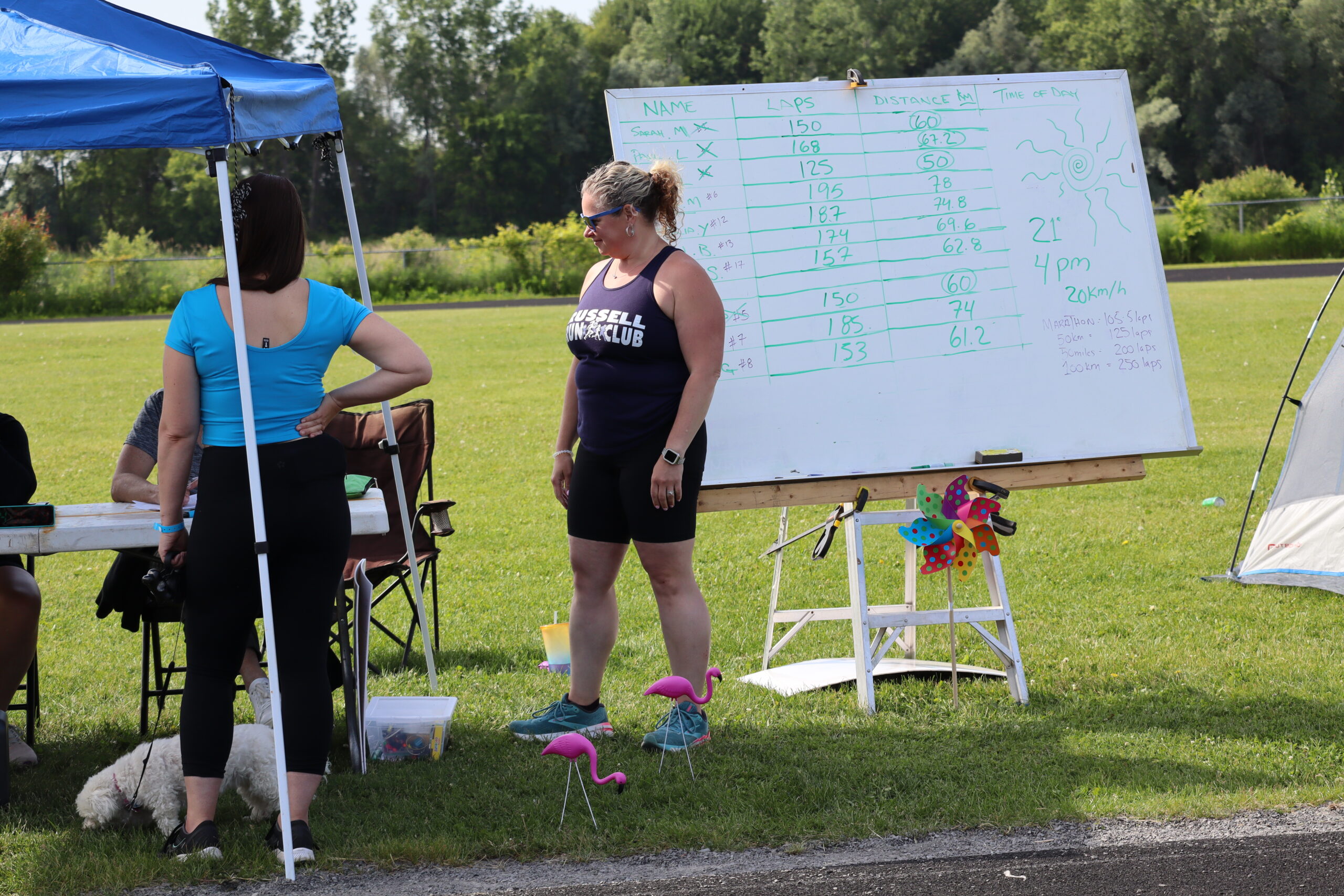
Originally, I thought timekeeping would be mind-numbing, so I planned to split it into 30-minute shifts. I sat down with a spreadsheet trying to fill all the slots, which was frustrating. I finally decided to create a timing board so volunteers could sign themselves up.
Great idea—on paper.
The board stayed completely blank.
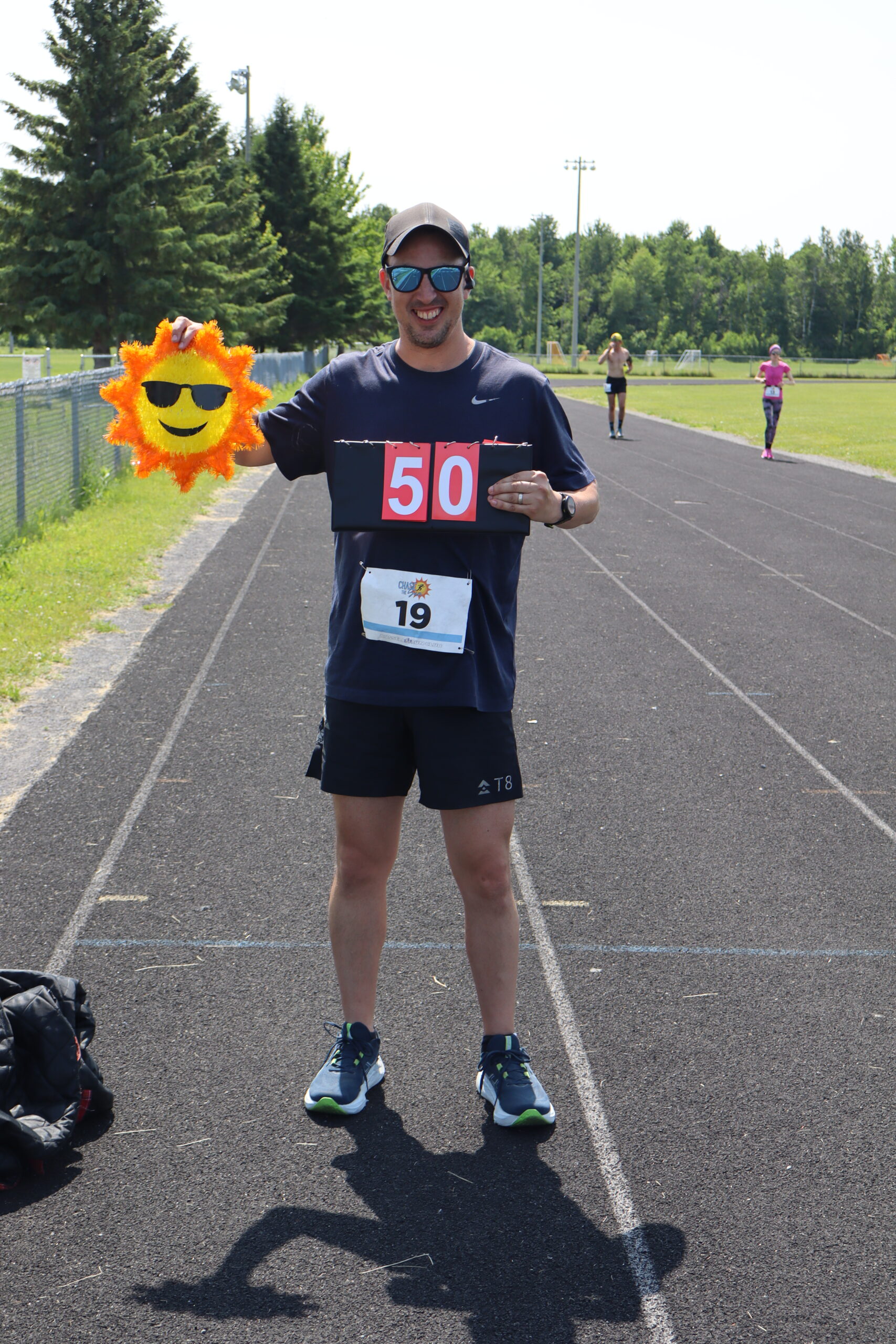
In reality, the timekeepers ended up sticking around much longer than planned. It wasn’t boring—it demanded full attention. Runners passed in little clusters, bib numbers flying by. Volunteers were calling out numbers, scribbling them on paper, and trying to keep up in the app.
Eventually, they worked out a system: one person called the numbers, another marked them down, and a third entered them digitally. Every so often, they’d stop to reconcile. They swapped shifts when they needed a break or when someone else came by to help.
The timing station was supposed to be off-limits, but it turned into the hangout and cheering section. Early on, it was hectic trying to keep up, but as the day wore on and the runners spread out, it finally settled into a manageable rhythm.
Fueling the Miles
The buffet, the hub, the hangout spot, RD headquarters—that was the plan.
I’d gone to Dollarama and Giant Tiger and stocked up on all the classic ultra fare: chips, candy, sandwiches, ramen noodles, and more. But in the end, a good chunk of it went home. Our runners were well prepared. The table turned out to be more of a supplement to what everyone had brought themselves.
If your stomach was off? Have some potatoes.
Craving something savory? Sandwiches and Mr. Noodle.
Feeling salty? Homemade pickles.
Need something sweet? Nerd Clusters.
Sometimes just knowing it was there was enough.

Lane Debates
One point I forgot to make clear in the documentation and during the pre-race briefing: the inner lane is 400m, but as you move outward, each lane gets longer.
I thought it was pretty self-explanatory. The difference between Lane 1 and Lane 2 is a couple of metres—and it goes up from there.
I didn’t think much of it until two runners came over to the timing station, frustrated that their Garmin didn’t match the distance on the board.
I started explaining that GPS watches aren’t 100% accurate, but then we realized what was really happening: most people weren’t sticking to Lane 1. They were side by side in Lanes 2 and 3, chatting, not hugging the inside line like they were chasing a record.
In the end, we couldn’t track who was in which lane or adjust the totals. We had to stick to the original rule:
Your total distance is the number of laps x 400m.
If someone stopped when their Garmin said they’d hit their goal, I still had to go by what our timekeepers recorded. Sorry.
(And by the way—the course wasn’t certified, so honestly, who knows exactly how accurate that 400m was anyway.)
When Time Slows Down
Running from sunrise to sunset is a long day—and standing around is, too.
There were plenty of moments when I’d glance at my watch and think:
We’re only five hours in…ten to go.
It’s 11 a.m.—we’re not even halfway.
Volunteers came and went as needed, taking breaks to rest. Same with the runners—though they weren’t allowed to leave the property.
Like any event, midday brought a lull—a mix of fatigue and boredom. But from experience, I knew it wouldn’t last. As the sun started to drop, the energy came back, and everyone was ready for that final push to the end.
No One Alone Out There
Yes, I allowed pacers. I even made a last-minute change to the Participant Guide (yup, I wrote a whole booklet). Not only were the runners excited, but so were the volunteers. A bunch mentioned they’d bring their sneakers just in case, so I added “at the Race Director’s discretion” to the guide.
Midday, Clair showed up to volunteer. Honestly, we were pretty well covered by then, but I know how much Clair loves to be active. So I sent her out onto the track to keep the runners moving. In her high school teacher style, she cheered, encouraged, and made sure no one was slacking.
Same with Tara, Melisande, and Amy, who jumped in at dusk to support the two remaining ladies grinding it out to hit that magical 100km mark.
We even drew a few spectators—current members, former members, and people who just came by to see what was happening. A few passersby wandered over, curious about all the tents and tables.
And, of course, there were the folks hoping to get in their own workout:
“Sorry, the track is reserved.”
“No, it’s not open for everyone any time.”
(Seriously—did you not know there’s a reservation system? Sorry. Pet peeve.)
The Last Laps
As the sun slowly dipped into the horizon, the number of runners on the track began to dwindle. Once they hit their goal distance—or their bodies decided they’d had enough—they started packing up and heading home.
I hadn’t expected all eleven from the sunrise start to stay the entire day. It was a long haul. Honestly, I was surprised (and impressed) by how far some of them went.
By the final hour, we were down to the last two ladies—one determined to keep going right until the end. We quietly started packing up what we could, trying not to make it obvious that we were all tired and ready to head home.
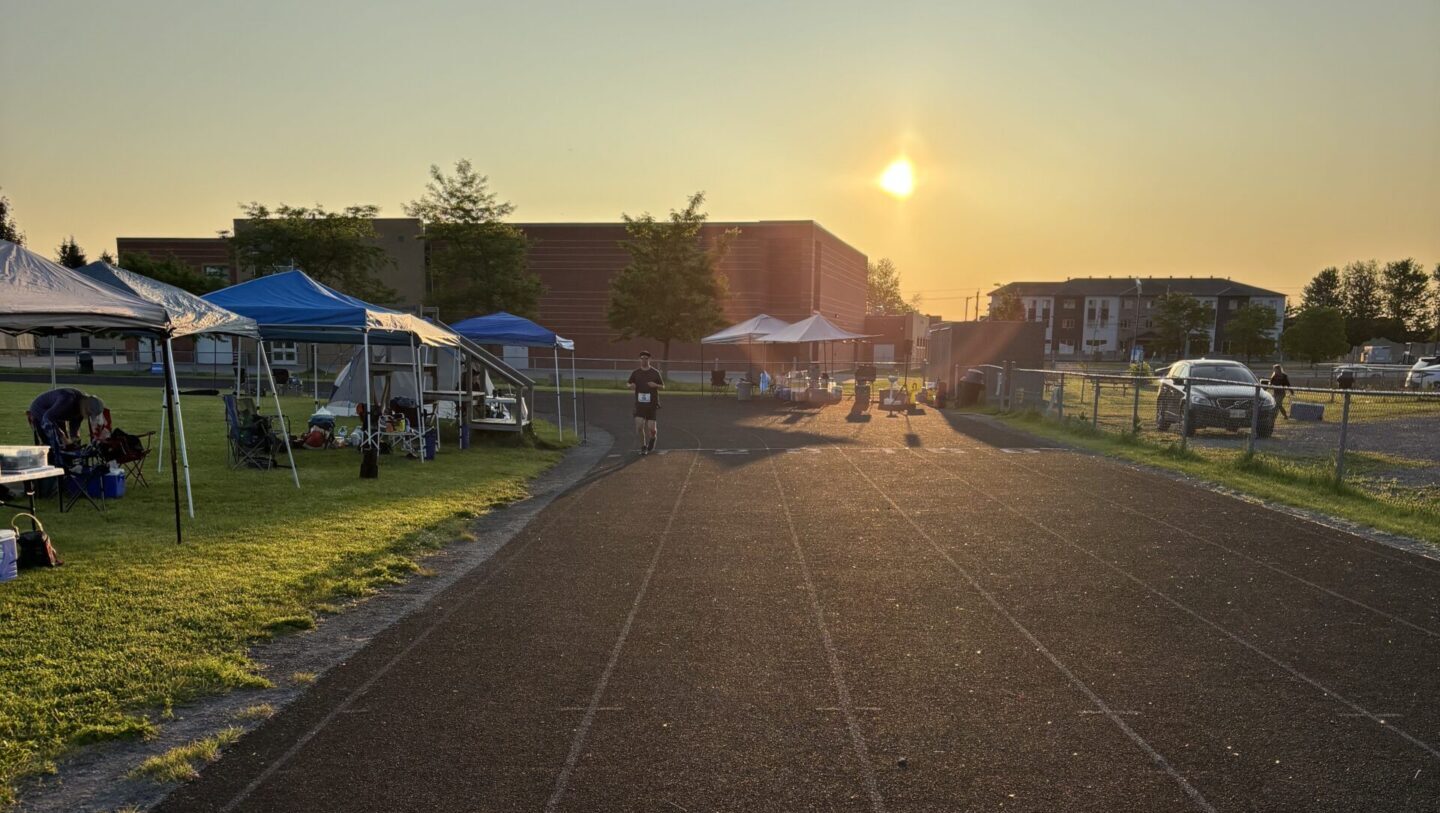
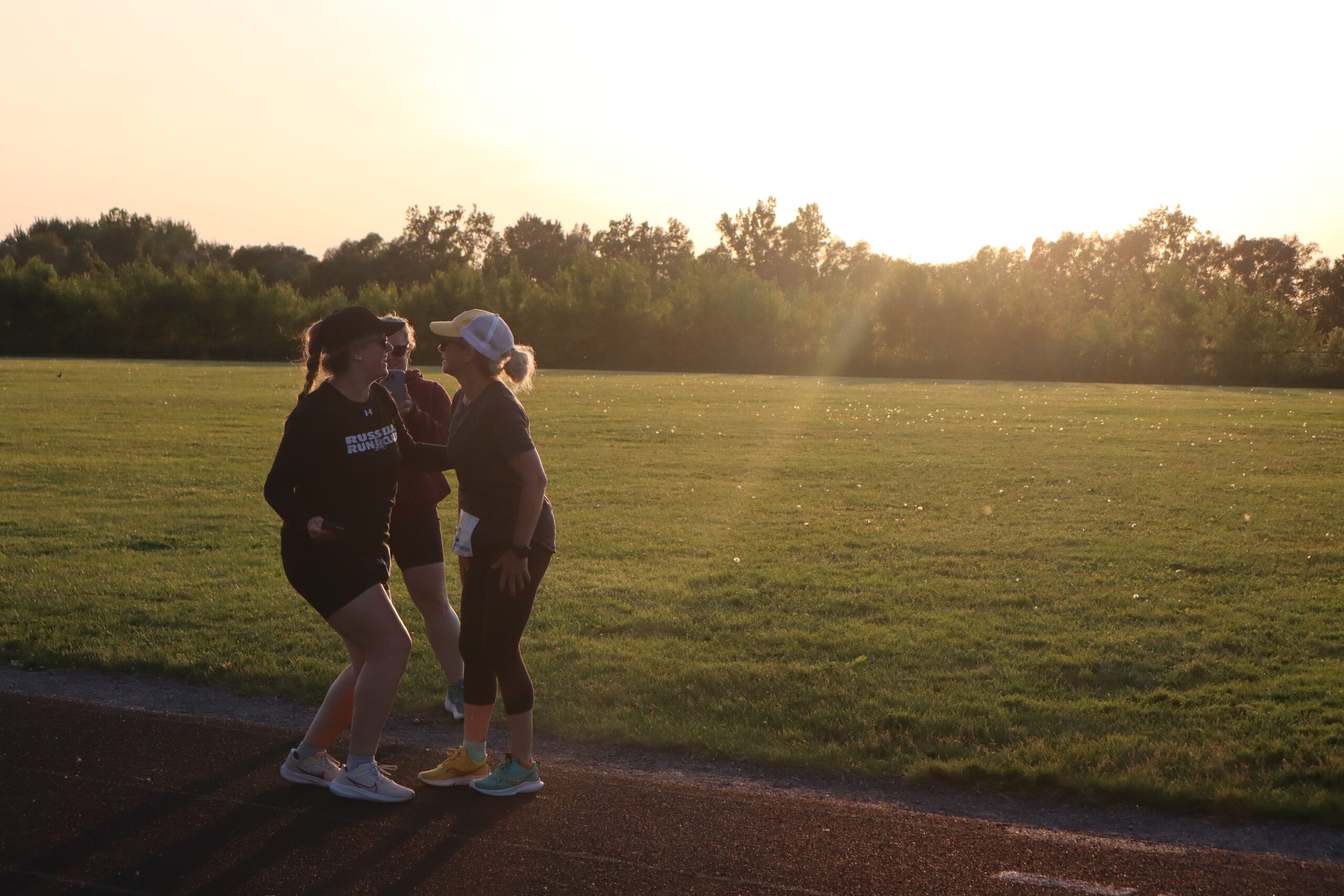
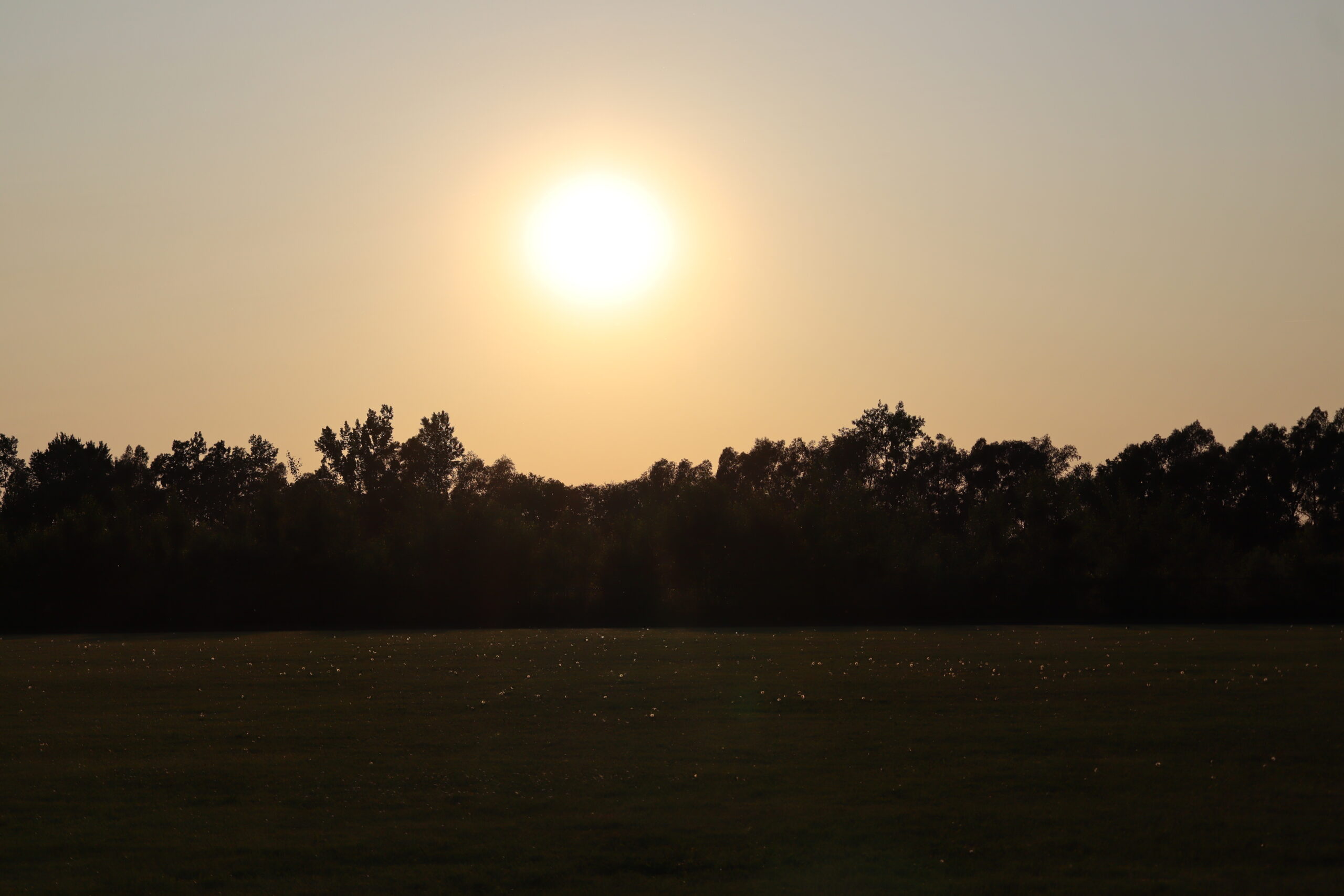
Just like the morning, the sun blessed us with a spectacular show on its way out, painting a beautiful backdrop for the finish to a special day.
The runners, their families, friends, and volunteers capped it off with cheers and hugs for the two women who kept moving until the very last minute.
The Stories Behind the Laps
You know how I feel about numbers and times—for races, at least. They’re just part of the story. They don’t define you as a runner. Sure, these folks racked up some serious mileage, but the stories behind those laps are what made this event special.
Pat was on a mission after a disappointing marathon (in her words). She arrived last, because she hates mornings, and ran with her trademark sass—complete with raspberries and middle fingers to the timers. She called it a day at 100 km.
Norman logged 28.4 km in three hours—pretty much because “why not?”
Marc ran 35.6 km before stepping in to crew for his wife, Pat, on her 100 km mission.
Marissa & Carolyn came for personal bests. Carolyn hit 21.6 km and was happy. Marissa kept going to 38.8 km—both with plenty to celebrate.
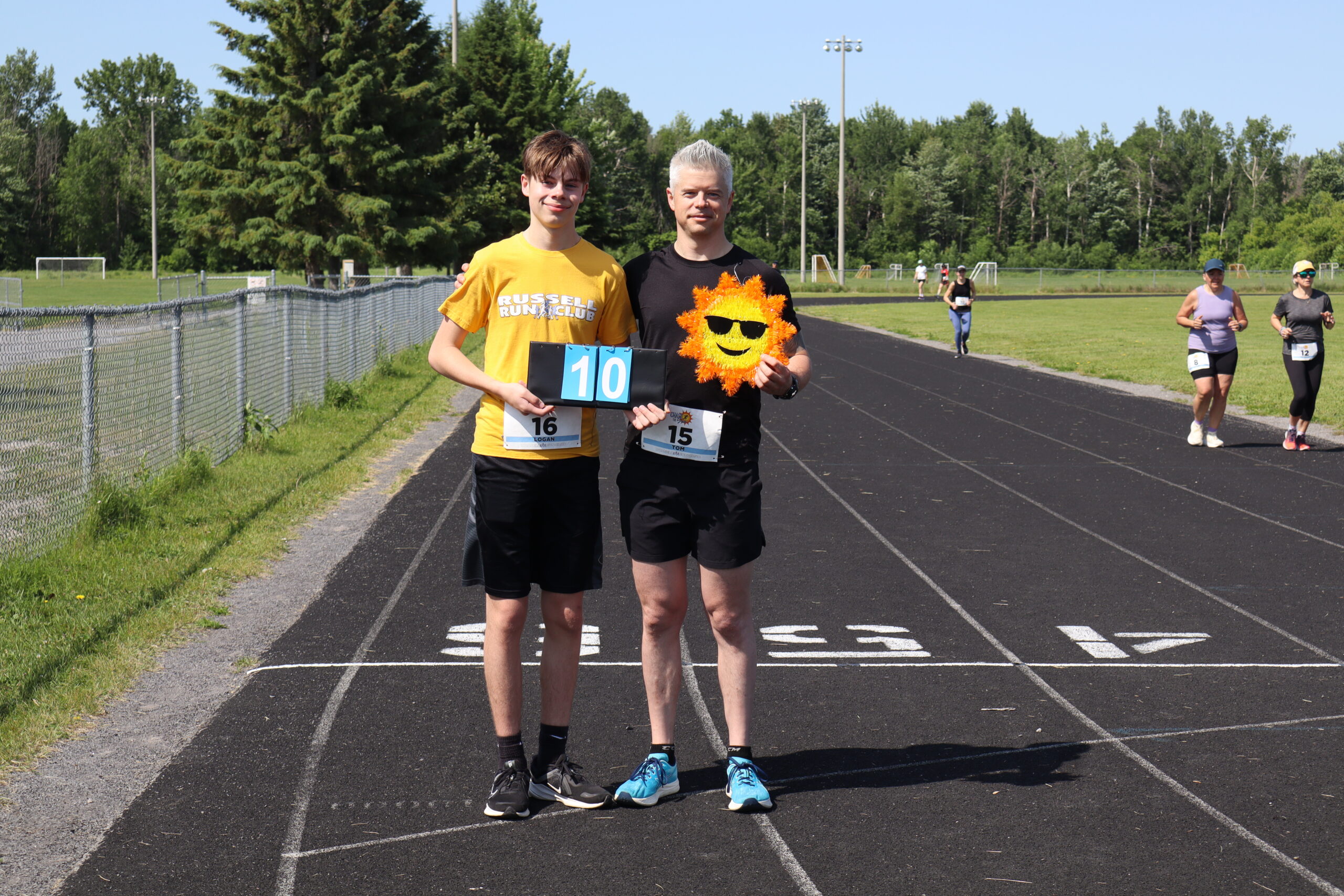
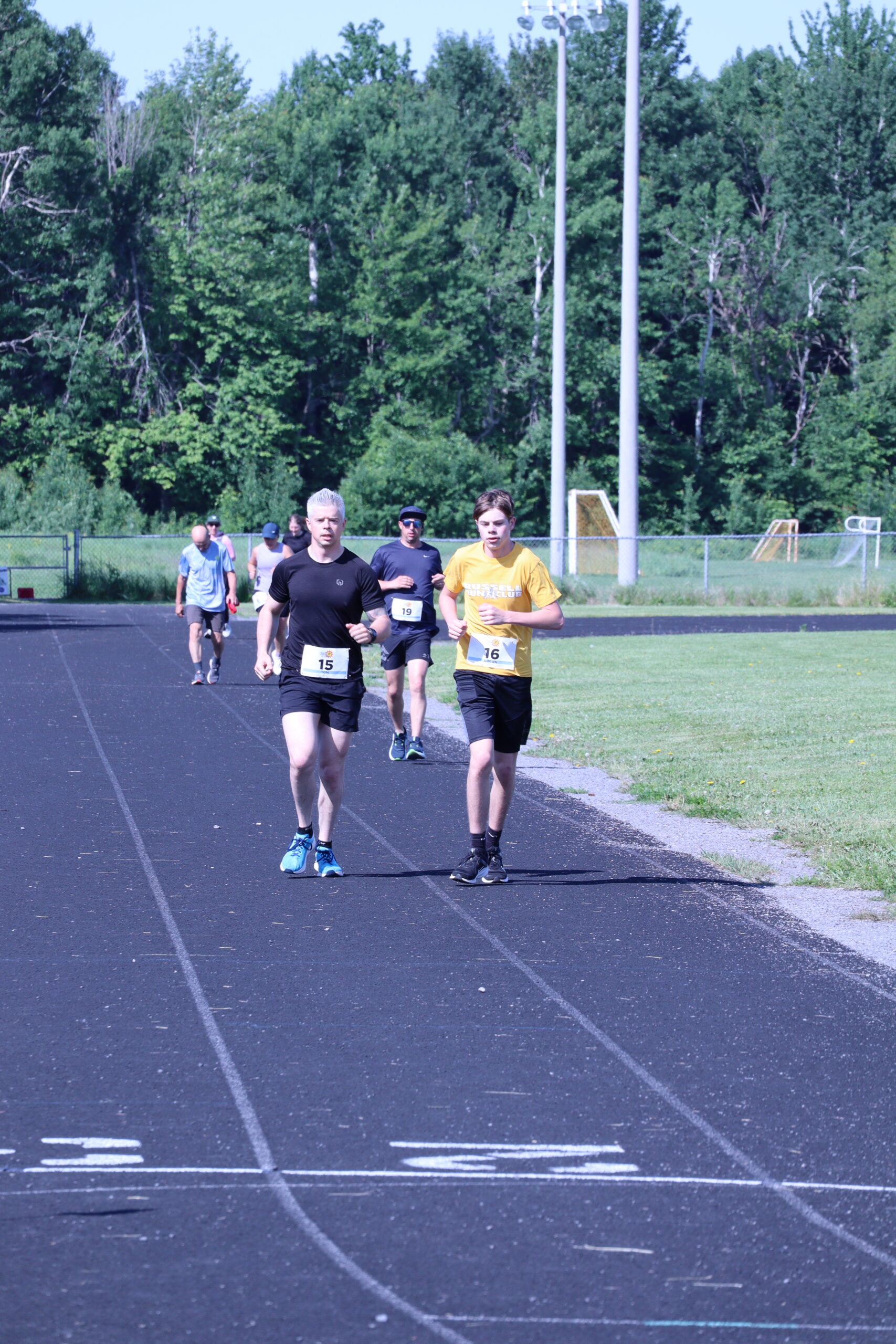
Tom & Logan, father and son, signed up for a one-hour run before Logan’s volunteer shift. They finished with 10.8 and 10 km, already dreaming about next year.
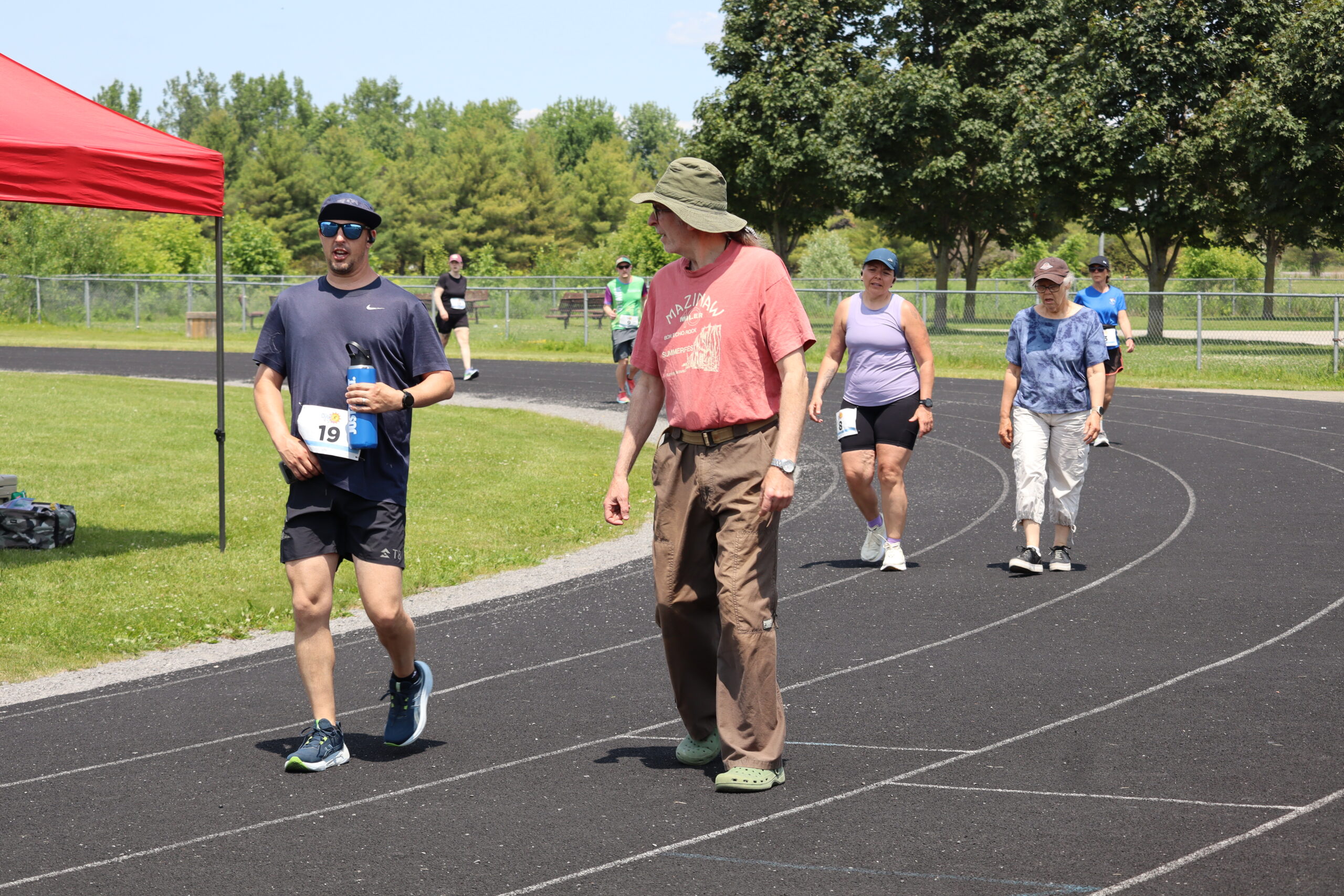
Dave arrived in khakis and Crocs, planning to help out. He got inspired, bought a full running kit at Giant Tiger, and casually ran 9.6 km.
Jacqueline found the event by chance after her Manitoba race was canceled. Quiet and peaceful, she ran 74 km over 12 hours, even as stomach issues set in.
Rox signed up last-minute with one goal: tick off 50 km. Mission accomplished.
Sarah & Rachel, the sisters, love to run long. They planned on 80–100 km but happily wrapped it up at 60, content and cheered on by Sarah’s kids.
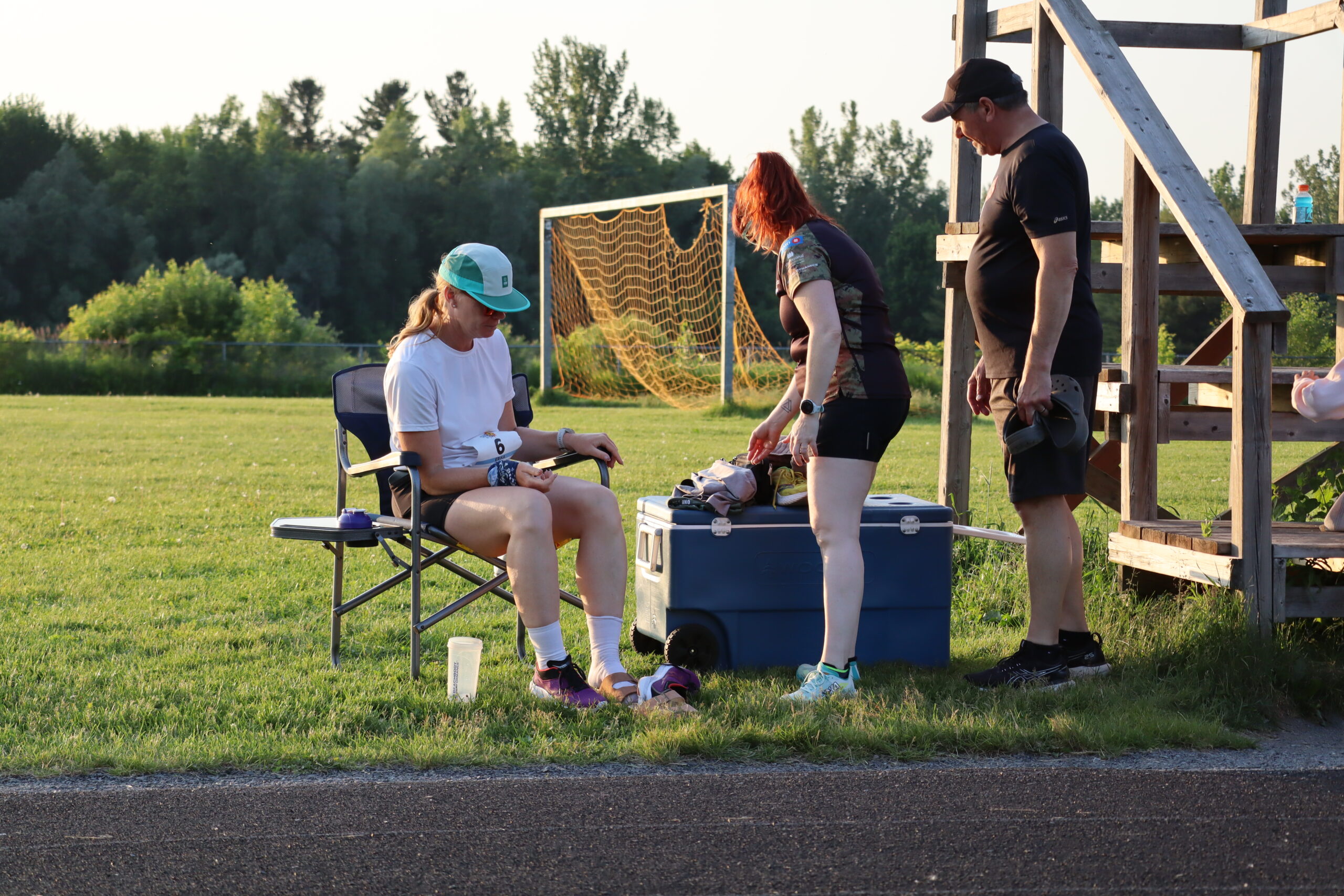
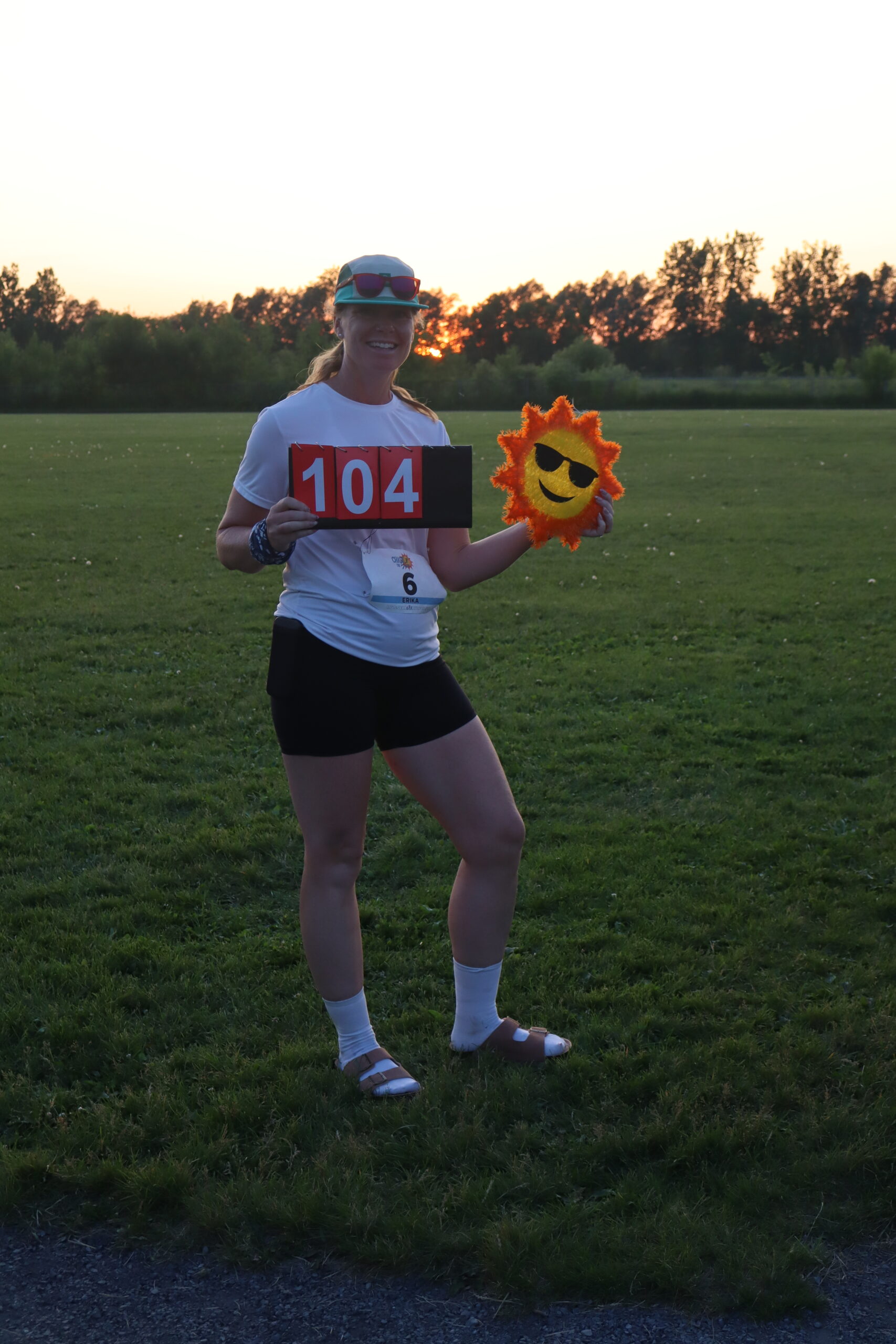
Erika was calm and steady all day. She didn’t seem to stop moving, and with Amy’s help in the final miles, she reached 104 km, stopping just minutes before sunset.
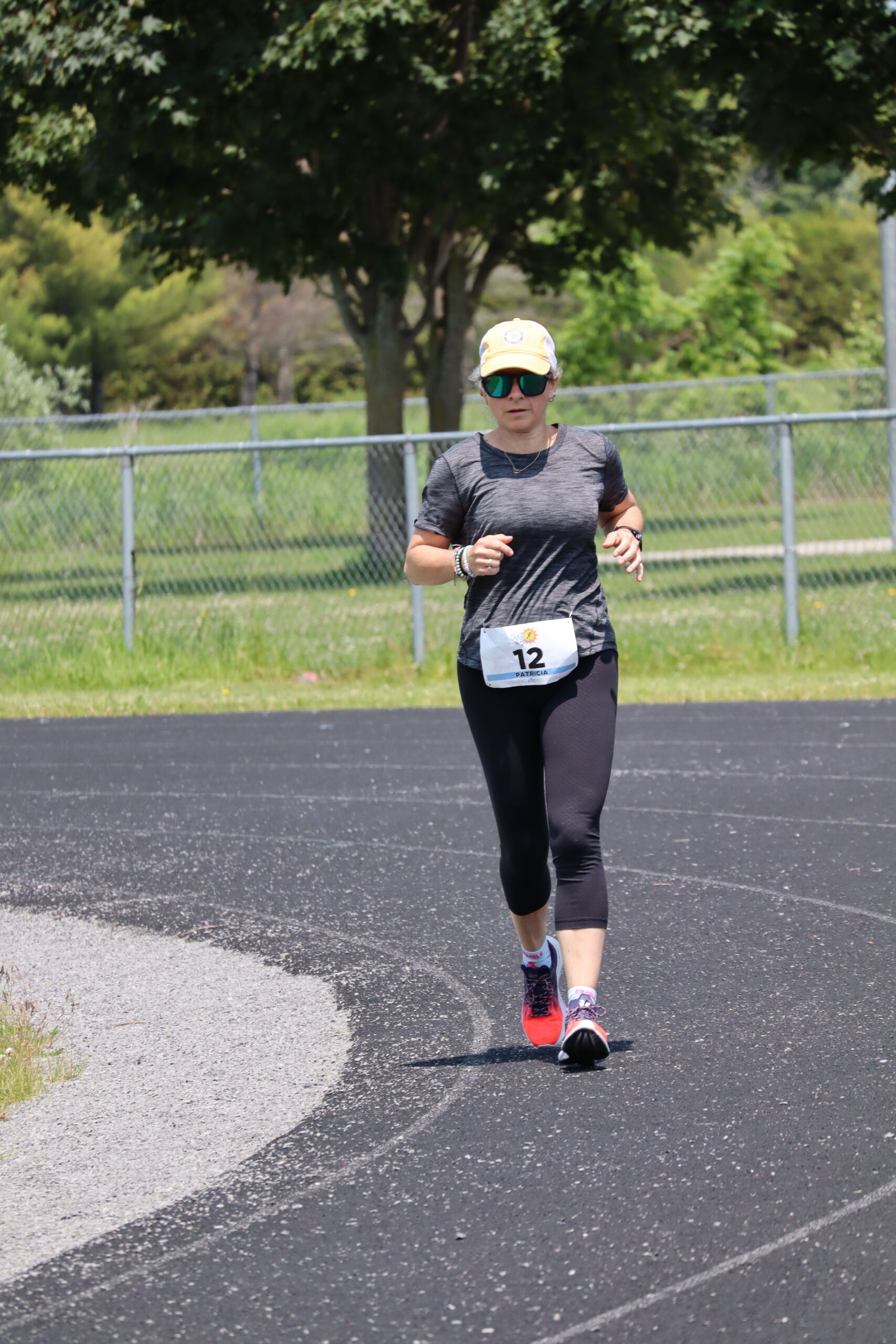
Nicole thought this would be “fun,” even though her longest run before was 10 km. She just kept going—past 21, then 42, then 50—and stopped at 72.8 km with a loose toenail and a big grin. Her family was so proud.
Shiloh & Derrick signed up to have fun and be challenged. Derrick flew around the track, eventually slowing to walk alongside Shiloh when her ankle flared up. They ended at 82.4 and 70 km, still smiling.
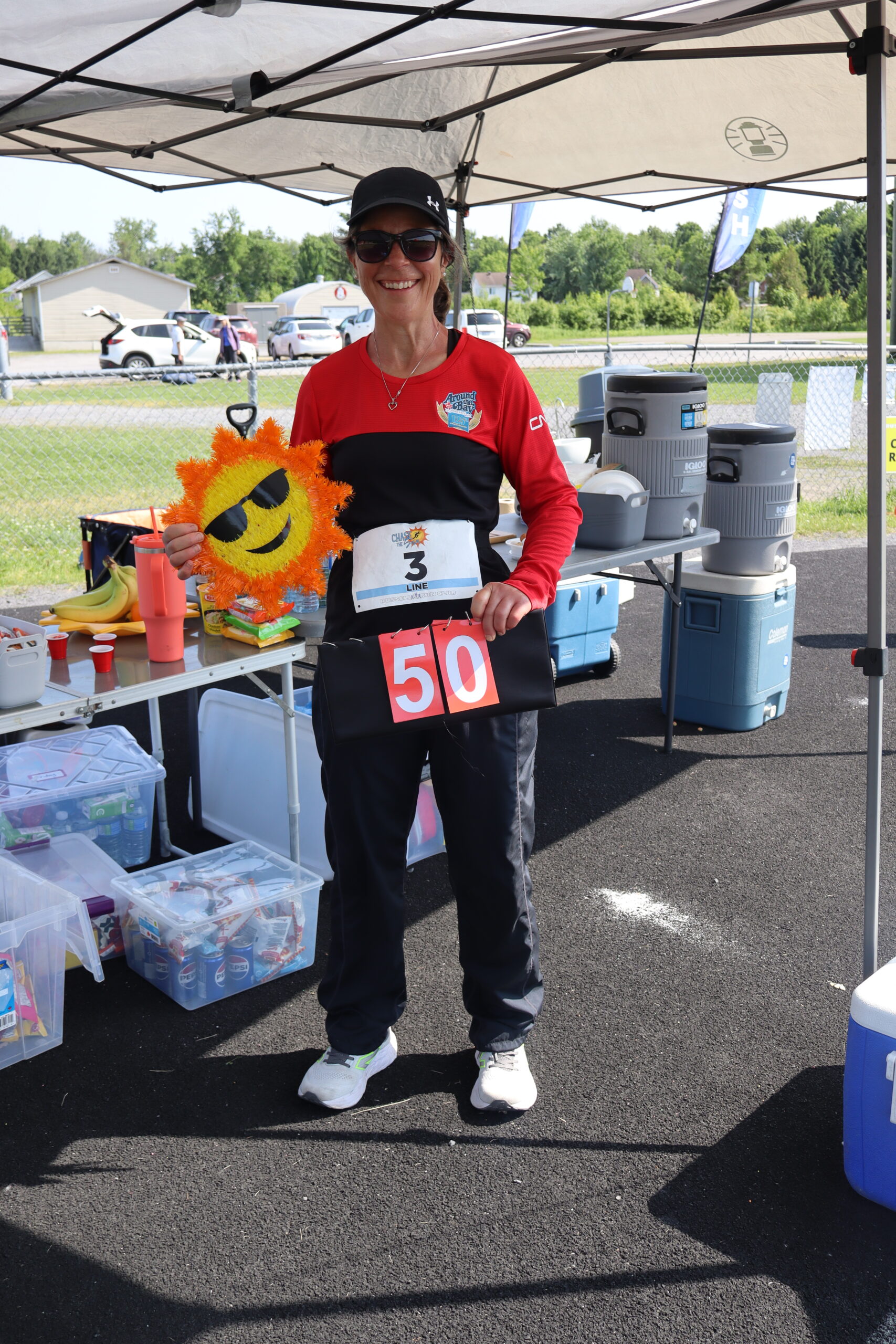
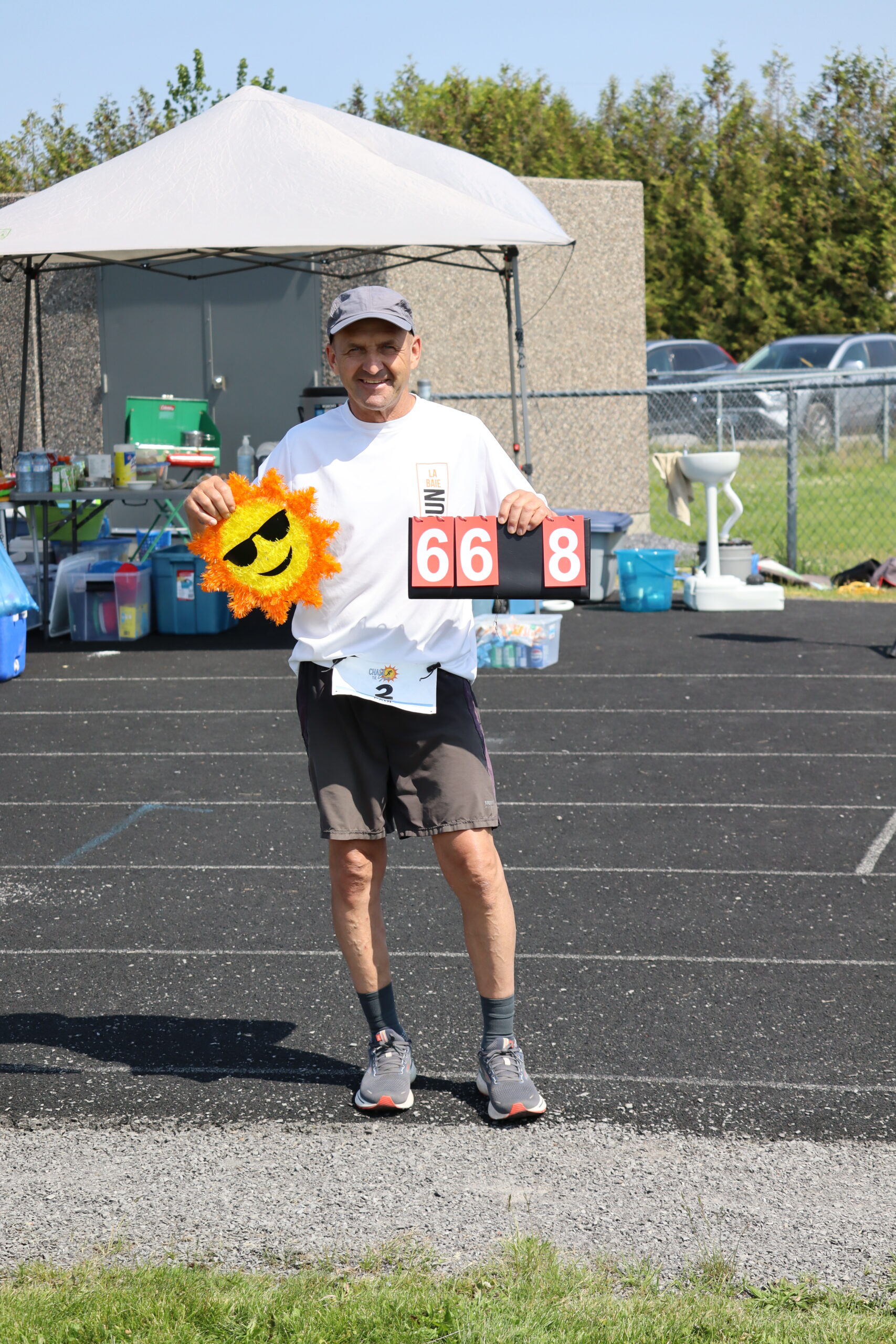
Paul & Line were half of the Casselman Dream Team. Line moved peacefully around the track aiming for 50 km, while Paul pushed for 100 km until stomach issues sent him for a nap. He still finished 66.8 km and stayed to cheer her to her ultra.
The Crew Behind it All
We can’t forget the volunteers from the Russell Run Club who made the event what it was.
Thank you to:
Yves & Melisande Carriere
Tammy Williams
Tara-Lynne Quesnel-Paul & Mike Paul
Logan Vance
Cathleen Bouret
Clair & Dave Sadler
Jay Abramovitch
Daniel Lavigne
And of course, my voluntold husband, Sean, who helped with setup and brought all his crewing experience to the table.
Looking Back & Looking Ahead
This first edition was, in many ways, a test run for the future—and a pretty good one at that. I was honestly taken aback by how well it all went and how warmly it was received. Running on a track is never easy—doing it for nearly sixteen hours is even harder. We lucked out with perfect weather, something we can’t always count on.
While this event was unfolding, I was quietly dealing with my own injury, one that might derail some of my plans for 2025. But standing there, watching this group of energetic, supportive people do something so big and so epic, reminded me why I love this community.
More than anything, we created stories, photos, and memories that will keep inspiring people long after the last lap was counted. A lot of runners have already said they’d love to come back—whether to see if they can go farther or just to soak it in again. Whether we keep it just as it is or grow it into something even bigger, I can’t wait to see what the next edition brings. If my own plans for 2025 don’t come together, this will still be one of the highlights of my year.

























Thanks Michelle for that mémorable event. I have learn from my mistake and i will be there next year to try again.