Running Intensity
How Fast Should You Run?
There are a few different ways to measure training intensity — pace, heart rate, or effort. All three can be useful, but when I build training plans, I usually focus on effort.
Rate of Perceived Exertion (RPE)
RPE is simply how hard the run feels on a scale of 1 to 10.
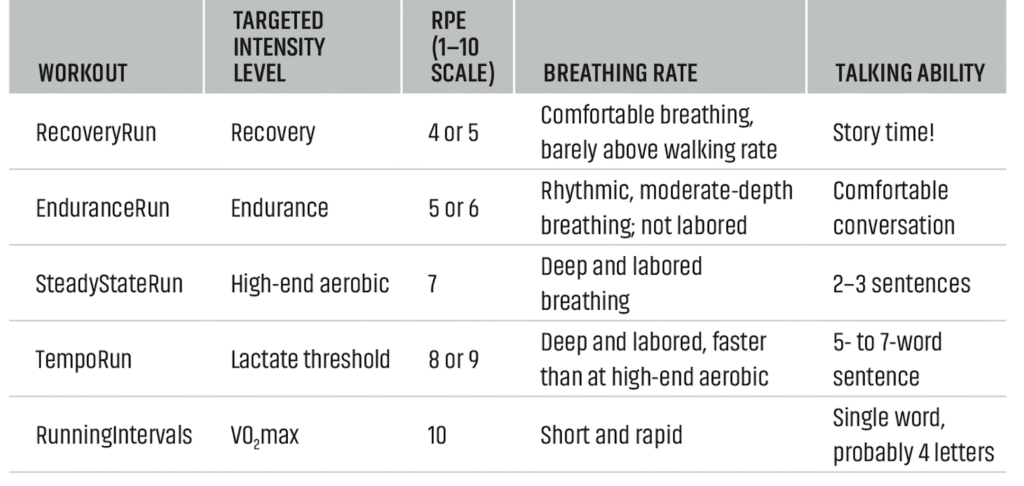
RPE is simple, doesn’t need a device, and works every day regardless of outside factors like stress, sleep, or weather.
Effort vs. Pace vs. Heart Rate
- Pace
- Benefit: Easy to measure and compare, great for race-specific workouts.
- Limitation: A fixed pace may feel very different depending on conditions. A “steady” pace on a good day might feel like a grind on a bad day.
- Heart Rate
- Benefit: Gives an objective measure of aerobic effort, especially useful for longer runs and easy days.
- Limitation: Heart rate lags behind effort (especially in intervals), and is affected by heat, caffeine, fatigue, and stress.
- Effort (RPE)
- Benefit: Always available, adjusts for daily conditions, builds body awareness. Perfect for new runners learning how running should feel.
- Limitation: It’s subjective. Early on, runners may not trust themselves to judge effort accurately. It takes practice.
Why I Focus on Effort
Effort-based running teaches you to listen to your body, not your watch. Some days your easy run pace will be faster, some days slower — but if the effort is right, the training benefit is the same. Over time, your fitness improves and pace naturally comes down at the same effort.